
Industrial premises with ageing plant and difficult access
Our Pretoria West service enquiries include a compressor starts but supply air stays warm, a unit repeatedly fails after repairs elsewhere and a rooftop unit becomes noisy or vibrates. We start from how the system is actually behaving and the installation conditions at the site, then discuss which diagnostic checks are appropriate for that model.
Pretoria West workshops and industrial buildings may have older split systems, roof-mounted units or several generations of controllers in one property. We ask which installation serves the affected workspace and whether its previous faults are documented before planning tests.
Common faults and how we approach them
- A compressor starts but supply air stays warm
- A unit repeatedly fails after repairs elsewhere
- A rooftop unit becomes noisy or vibrates
A compressor starts but supply air stays warm
A running outdoor assembly does not show that the entire system is cooling correctly. Inadequate airflow, fan faults, control decisions or refrigeration performance can produce similar symptoms. We compare indoor conditions, coil behaviour and equipment settings before discussing sealed-system work.
A unit repeatedly fails after repairs elsewhere
Repeat trips can indicate an unresolved electrical supply condition, fouled heat exchangers or components operating outside their intended duty. We ask what was previously replaced and when the failure returned. Replacing the same component again without testing the underlying operating condition may waste time and money.
A rooftop unit becomes noisy or vibrates
Loose mountings, deteriorated fan components, duct vibration and compressor behaviour create different kinds of noise. We ask whether the sound appears during start-up, fan-only operation or cooling demand. Unsafe access is not attempted without the correct equipment, permissions and isolation.
Planning the right service assessment
Working methodically on mixed-age systems
When plant has been maintained by several providers, control settings and replacement parts may no longer match the original documentation. We establish the exact installed model and look for any manufacturer-approved alternatives used during past work. A newer thermostat connected to an older unit may change the way alarms are displayed, but it does not remove the need to inspect fans, coil airflow and wiring condition. If two adjacent units serve one workspace, we also ask whether one is carrying most of the demand because the other has been unavailable for months.
Access restrictions often determine what is practical on an industrial roof or in a crowded plant area. A ladder alone may not be appropriate for every location, so the site must confirm the correct access method and any roof permits. We ask for service records, photos of the rating plate and a description of the failed operating mode. After diagnosis, we make the difference clear between a minor serviceable component, a control compatibility issue and a repair that may no longer be economical.
Information that helps narrow the fault
Please identify the air-conditioning unit and record the approximate time of any shutdown, the indicated alarm, the operating demand and whether the affected area becomes warm before or after the alarm. These observations help separate an ongoing performance loss from a protective trip. Do not open panels to obtain a reading.
Can older industrial air-conditioning equipment still be repaired?
Often, depending on the fault and availability of compatible components. We assess safe repairability and operating cost before making a recommendation; the age alone does not identify the failed part.
For a service enquiry in Pretoria West, it helps to distinguish "a compressor starts but supply air stays warm" from "a rooftop unit becomes noisy or vibrates" when you speak with us. They can lead to different diagnostic checks even on the same installation. Share the stage at which the fault occurs and any conditions that changed immediately beforehand. We will discuss the next step after the relevant service arrangements and access needs are clear.
What to have ready before an appointment
Please identify the equipment on a site plan if several units look alike and advise whether keys, ladders, permits or security induction are needed. Historical service reports and a clear photograph of the unit label can help prevent compatibility errors.
Diagnosis and the repair decision
Confirming that the reported fault has been addressed
After repair, we explain any remaining plant limitations, particularly where replacement parts are no longer readily available. The objective is a dependable operating plan and an informed repair-or-replace decision, not a temporary restart presented as a full solution.
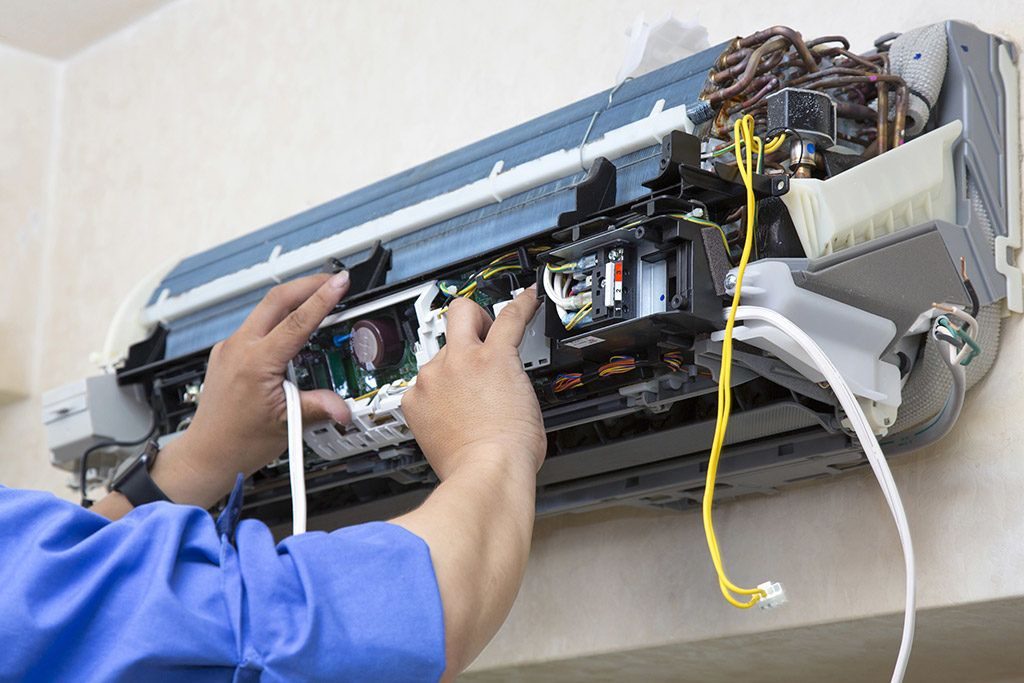
Service considerations in Pretoria West
Our assessment relates to industrial premises with ageing plant and difficult access. Tell us which of the following symptoms you are seeing so we can discuss the next step:
- A compressor starts but supply air stays warm
- A unit repeatedly fails after repairs elsewhere
- A rooftop unit becomes noisy or vibrates
Electrical isolation, roof access, moving fans, pressurised refrigerant circuits and plant-area permits require appropriate authorised personnel. Do not reset a repeatedly tripping system or defeat an interlock to keep production cooling running. Where the site has a permit-to-work procedure, advise us in advance.